
Chocolate Marketing: 8 Ways Brands Can Stand Out Online and on the Shelf
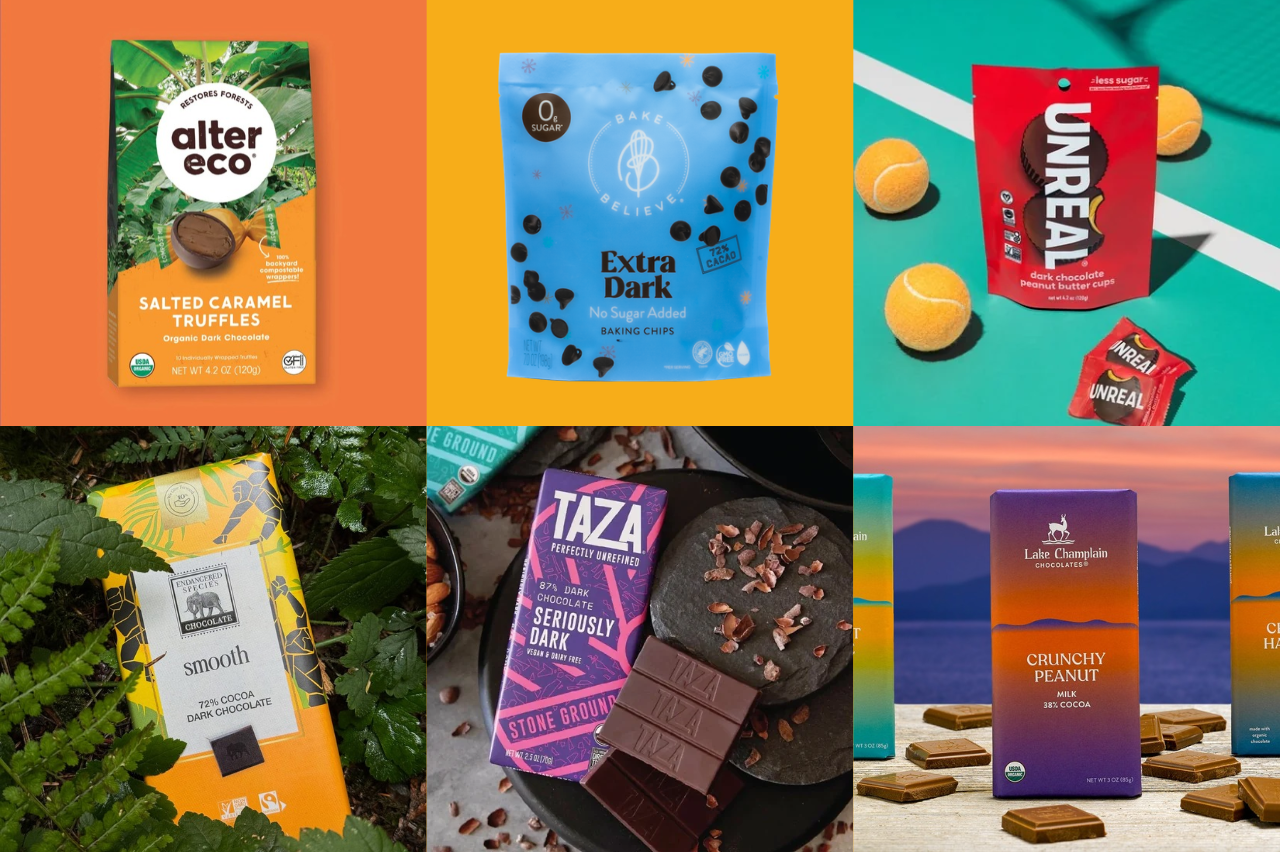
Chocolate brands should have it easy. The key word here being ‘should.’
The product already looks delicious. People already want it. Nobody needs a long (or even short) explanation of what chocolate is.
Which is exactly why pretty much all chocolate marketing ends up looking the same.
Glossy close-up. Melted chocolate. Gift box. A few cocoa beans scattered in the background. Maybe a red bow if it’s December.
Marketing Director’s claim “the stats speak for themselves and this approach is proven.”
There’s real logic to that argument and the underlying truth isn’t all that bad.
It just doesn’t tell me why I should buy this chocolate instead of the 20+ other options beside it.
And that’s where the real challenge for chocolate brands lies. Standing out in an absurdly crowded marketplace.
According to the National Confectioners Association, the U.S. confectionery category reached $55 billion in retail sales in 2025, and 99.8% of households purchased confectionery at least once.
Which means chocolate brands don’t have to convince people that chocolate is worth eating, as we’ve already pointed out and you’re well aware of.
They just have to convince people that their chocolate is the one worth choosing.
Without further ado, here are eight ways to do just that.
1. Give People a Better Reason Than “It Tastes Good”
I’d hope it tastes good. It’s chocolate. Imagine if someone were trying to sell a chocolate that famously didn’t taste good (maybe that’d work in some disturbing parallel reality).
But let’s get real: Taste is the priority here. It’s the biggest factor in global chocolate marketing.
However, focusing on taste makes things complicated. Literally every chocolate brand on earth (and probably on other planets, should there be life out there) is going to make some version of the same claim. Rich. Smooth. Indulgent. Decadent. Delicious.
After a while, the words don’t matter. Actually, that happens pretty much immediately.
The strongest chocolate marketing strategies give people a more specific reason to care.
Maybe the product is:
- Lower in sugar
- Made with organic ingredients
- Ethically sourced
- Designed for baking
- High in cacao
- Free from certain allergens
- Built around an unusual flavor
- Positioned as a premium gift
- Made for portion-conscious consumers
Finding devoted customers can also come from an occasion. Not just participating in an occasion… but owning an occasion.
Think afternoon snacks, lunchbox treats, movie nights, baking, gifting or something to share with friends. Giving people a specific moment to associate with the product is more valuable than owning an ingredient claim.
The point of difference needs to be extremely clear. Clear enough that somebody can understand it within a few seconds.
ChocXO, for example, built its positioning around organic, high-cacao chocolate with less sugar and no strange aftertaste. In our conversation with ChocXO’s Wade Pugh and Rob Greenhow, they explained how that product philosophy connects to the company’s broader business and ethical decisions.
“Tastes good” is expected.
Why is your particular chocolate brand different? That’s where your focus should be.
2. Make the Packaging Work in More Than One Place
Chocolate packaging has several jobs. And more jobs have been added to that list over the past few generations.
It needs to stand out on a shelf, look clear in an online product listing, appear recognizable in social content and still make sense when a creator’s holding it at arm’s length. That’s not the entire list.
A package can look fantastic in a designer’s presentation and disappear completely in a retailer’s search results.
I’ve noticed this while shopping in countries where I can’t always understand the language on the package (I wrote this in a Tirana, Albania coffee shop). When the copy can’t help me because of a language barrier, I rely on the logo, colors, imagery and basic visual hierarchy to figure out what I’m buying.
I almost never use that language scanner every phone has nowadays. Too much work.
Chocolate brands should look at their packaging in all the places customers will actually encounter it:
- On a crowded shelf
- In an Amazon or retailer thumbnail
- In an Instacart search
- In a creator’s hand
- In a recipe video
- In professional product photography
- In a customer’s unboxing post
Can people still identify the brand?
Can they tell what kind of chocolate it is?
Does the main benefit remain visible on a small screen?
Alter Eco learned this the hard way. CEO Keith Bearden told Firebelly the brand had built a strong reputation around sustainability, but it still wasn’t profitable.
When its CMO asked him to describe Alter Eco’s chocolate in one word, she rejected “organic” and “sustainable.” “Delicious” was the answer that worked.
She also pushed the brand to make a massive packaging change. They moved their Swiss-made positioning from tiny print on the back to the front of the package.
Why? Because once customers taste the chocolate, Alter Eco earns the right to discuss regenerative agriculture and compostable packaging.
Purpose matters, but it can’t replace product appeal or profitability.
Our article on seven snack packaging trends brands should watch explores this in more detail. Packaging can’t just be designed for the physical shelf anymore… doing that is a massive mistake that costs chocolate brands a great deal of revenue. It has to survive e-commerce and social media too.
3. Show What the Chocolate Feels Like
Chocolate is an unusually visual product, but static beauty shots can only go so far.
People want to see it snap. Melt. Drizzle. Break apart. Fold into batter. Come out of the oven. Stick to somebody’s fingers.
It’s what makes the product feel real, which plays a major role in getting someone to fantasize about it.
If I’m buying premium chocolate, I want to see its texture and finish. If I’m buying baking chocolate, I want to see what happens when someone uses it in a recipe. If I’m buying a lower-sugar alternative, I want some reassurance that it still looks and tastes like something I’d enjoy.
Good chocolate content creates a sensory reaction before the customer has tried the product.
That might include:
- Close-up breaking or snapping shots
- Recipe demonstrations
- First-bite reactions
- Comparisons between flavors
- Behind-the-scenes production footage
- Serving suggestions
- Short videos showing texture and consistency
- Customer reactions that haven’t been polished to death
Chocolate marketing should make people hungry.
That sounds almost too simple, but a surprising amount of content forgets to do it.
4. Use Recipes to Show Why the Product Belongs in Someone’s Life
Recipes give chocolate brands something more valuable than another product shot.
They give people a reason to save the content, share it and return to it later.
Recipes also are a great avenue to connecting a product to an occasion. Think holiday baking, birthday desserts, game-day snacks, movie-night treats or a quick afternoon fix.
We saw this firsthand through our work with Bake Believe, a no-sugar-added chocolate brand. Firebelly developed a multichannel strategy that included recipe videos, creator content, giveaways, paid campaigns and consistent social content.
The results included a 159% increase in audience size and a 109.3% increase in impressions. Recipes, giveaways, product announcements and UGC were among the strongest-performing content types across the brand’s social channels.
You can read the complete Bake Believe case study here.
Recipes worked because they showed the product actually doing something.
Instead of repeatedly telling customers that the chocolate was useful for baking, the content demonstrated exactly how it could fit into brownies, cookies, desserts and everyday kitchen experiments.
A good recipe also reaches people who aren’t currently shopping for chocolate. They might discover the recipe first and the product second.
That’s a much more natural introduction than another ad saying, “Buy this chocolate.”
5. Let Creators Be Honest About the Experience
Chocolate is perfect for creator content. Why? Because it produces an immediate reaction. And we live in a world with less patience than ever. Consumers are more impulsive than ever.
Someone opens your chocolate, tries it and tells the audience what they think.
Brands sometimes make this more complicated than it needs to be. The creator gets a long script, six required talking points and a list of words they’re not allowed to use. By the end, it sounds like somebody reading the package aloud.
Give creators a clear brief, but let them have a reaction.
Maybe they love one flavor more than another. Maybe the snap surprises them. Maybe they use the product in a strange recipe. Maybe their kid steals half the bag before they finish filming.
Those moments make the product feel real.
Through our UGC and influencer marketing services, we help brands find creators who fit the audience and produce content that can work organically or as paid creative.
Follower count isn’t the only thing that matters.
A smaller baking creator with a loyal audience might be much more useful to a chocolate brand than a general lifestyle influencer with ten times the reach.
The right person makes the product believable.
6. Build Around Occasions, Not Just Holidays
Seasonal marketing is enormous for chocolate brands, and it deserves serious planning.
The National Confectioners Association reports that Valentine’s Day, Easter, Halloween and the winter holidays account for roughly 64% of annual chocolate and candy sales. Consumers actively look for seasonal flavors, shapes and packaging.
Brands should absolutely take advantage of that demand.
The problem comes when the brand only has something interesting to say during a holiday.
Chocolate also fits into birthdays, movie nights, baking, road trips, small gifts, stressful Tuesdays and the moment when somebody wants something sweet after dinner.
Those everyday occasions can support the brand between major retail peaks.
A useful content calendar might combine:
- Holiday launches
- Limited-edition flavors
- Gift guides
- Everyday recipes
- Product education
- Creator tastings
- Behind-the-scenes stories
- Customer rituals
- Retail availability
- Unexpected consumption occasions
Seasonal chocolate advertising can produce a major sales spike. The rest of the year is when brands build the familiarity that makes shoppers choose them once the holiday display appears.
7. Connect Social Attention to a Place Where People Can Buy
A chocolate video can get thousands of views and still do very little for the business.
Sometimes the problem isn’t the content. It’s what happens after somebody watches it.
Can they find the product?
Is there a store locator?
Does the social post mention the retailer?
Is the product page clear?
Does the online listing use strong images and explain the main benefit?
Is the item actually available in the region where the ad is running?
These details aren’t exciting, but they matter.
If a creator introduces somebody to a chocolate brand, the next step should be easy. That might mean directing them to Amazon, a retailer, Instacart, the company’s website or a nearby store.
And if the campaign is built around an occasion, the purchase path should continue that story instead of sending everyone to a generic homepage. This point is vital.
Our retail media services help food and beverage brands connect social demand with opportunities to purchase through Amazon and retailer platforms.
Getting someone interested is only half the job.
The brand also has to be present when that person decides to buy.
Buying chocolate should be the easiest thing your customer does on any given day.
8. Measure More Than Likes
Chocolate content usually has an advantage on social media because the product is so visual.
That can also make brands a little too comfortable with surface-level results.
A nice video gets likes. A melting shot gets views. A giveaway attracts comments and follows.
Those numbers are useful, but they don’t tell you whether the marketing is helping the business.
Depending on the campaign, chocolate brands should also look at:
- Brand searches
- Website and product-page traffic
- Store-locator visits
- Retailer clicks
- Add-to-cart activity
- Paid advertising performance
- Recipe saves
- Creator content performance
- Retail sales
- Repeat purchases
- Customer reviews
- Sales during and after promotions
The goal determines the measurement.
A product-launch campaign shouldn’t be evaluated exactly like an evergreen recipe series. A holiday promotion shouldn’t be measured like a creator-awareness campaign.
Our paid social media services combine creative testing, targeting and ongoing optimization so brands can see which ideas deserve more investment.
Likes are a signal.
They’re not the final result.
Remember: Vanity metrics and sales metrics usually have no relation to one another.
Strong Chocolate Marketing Gives People Something to Remember
Chocolate has an emotional advantage that most products would love to have.
People associate it with rewards, gifts, celebrations, comfort and shared experiences. They already want to enjoy it and have very few experiences where they don’t… if any. I’ve personally never had a negative experience eating chocolate.
But that does NOT mean every chocolate brand automatically stands out.
If the positioning sounds familiar, the packaging disappears on the shelf and the content looks like every other slow-motion chocolate drizzle, customers won’t have much reason to remember the name.
Strong chocolate marketing makes the difference clear.
It shows the product in use. It gives creators room to make it believable. It plans for the holidays without disappearing between them. It connects social attention to retail availability. Most importantly, it gives people a reason to choose that product again.
The chocolate still has to taste good, of course.
Marketing can earn the first bite.
The product has to earn the second.
If your chocolate or confectionery brand needs help with social strategy, content, creators, paid advertising or retail media, let’s talk.
Chocolate Marketing FAQs
What is chocolate marketing?
Chocolate marketing includes the branding, packaging, content, advertising, promotions and retail activity used to help consumers discover and purchase a chocolate product. It can include social media, creator partnerships, paid advertising, recipes, product listings and in-store campaigns.
How can a chocolate brand stand out?
A chocolate brand needs a clear point of difference that goes beyond taste. That might include ingredients, sourcing, sugar content, an unusual flavor, a specific use, premium positioning or a strong brand personality. Packaging and content should communicate that difference quickly.
Which social media platforms work best for chocolate brands?
Instagram, TikTok, Facebook, Pinterest and YouTube can all work, depending on the audience and content. Short-form video is useful for tastings, recipes and sensory product footage, while Pinterest can be especially valuable for evergreen recipe discovery.
Should chocolate brands work with influencers?
Absolutely! Especially when the creator fits the product and audience. Baking creators, food reviewers, lifestyle creators and niche diet-focused creators can demonstrate how the chocolate tastes and fits into real situations. A relevant, trusted audience is usually more valuable than a large but unfocused following.
Be picky here; don’t just agree to collaborate with an influencer with a large following. Audience fit is the key.
About the author
Graydon Leigh works in content and social media at Firebelly Marketing. He writes about food and beverage marketing while travelling overseas, where browsing unfamiliar grocery aisles has become an accidental hobby.

